Consciousness and brain activity: questions from my notes
Two handwritten notes on consciousness, sleep and anesthesia, rewritten as a personal hypothesis with separate scientific context and original pages.
Where should we look for consciousness?
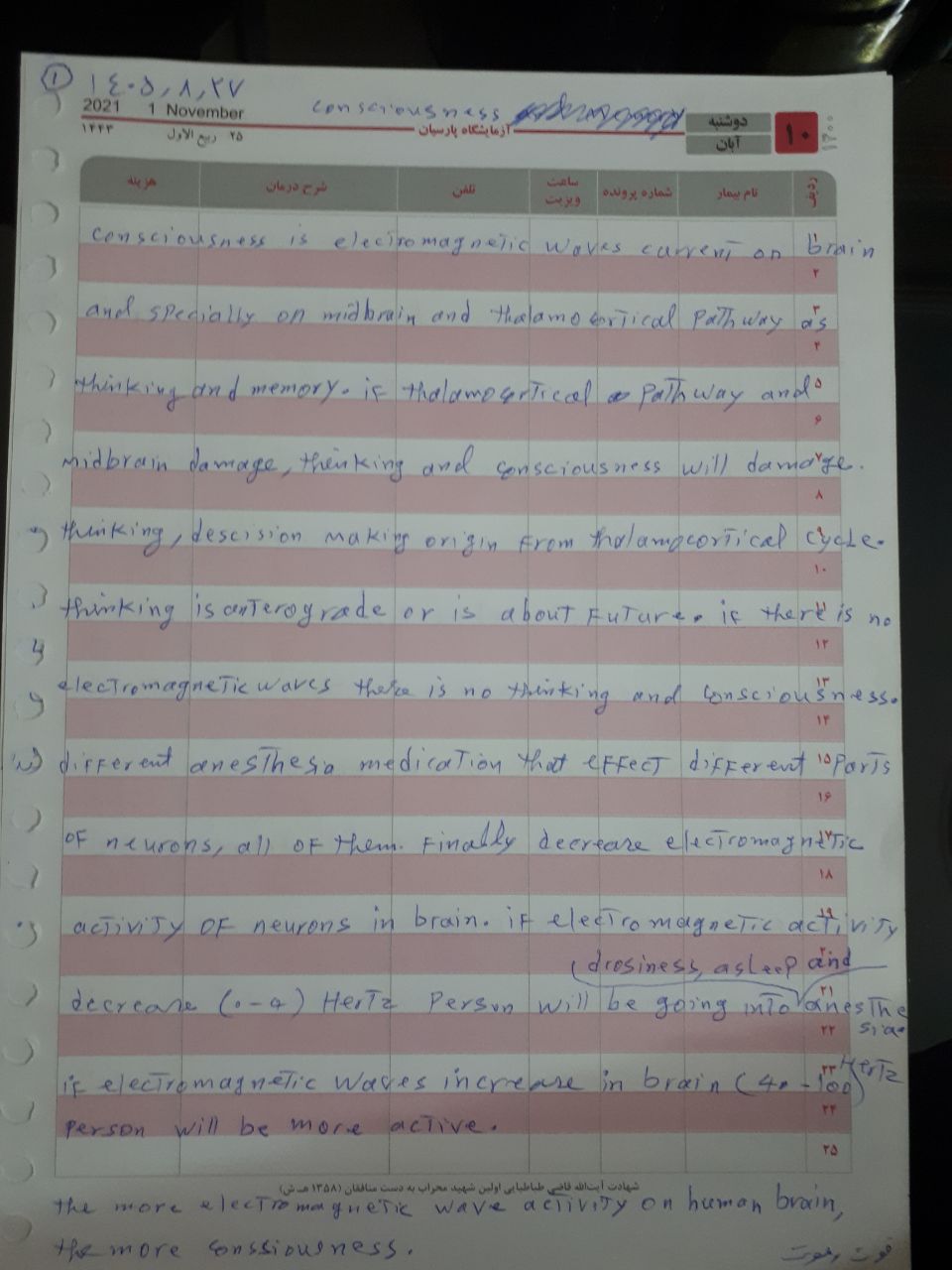
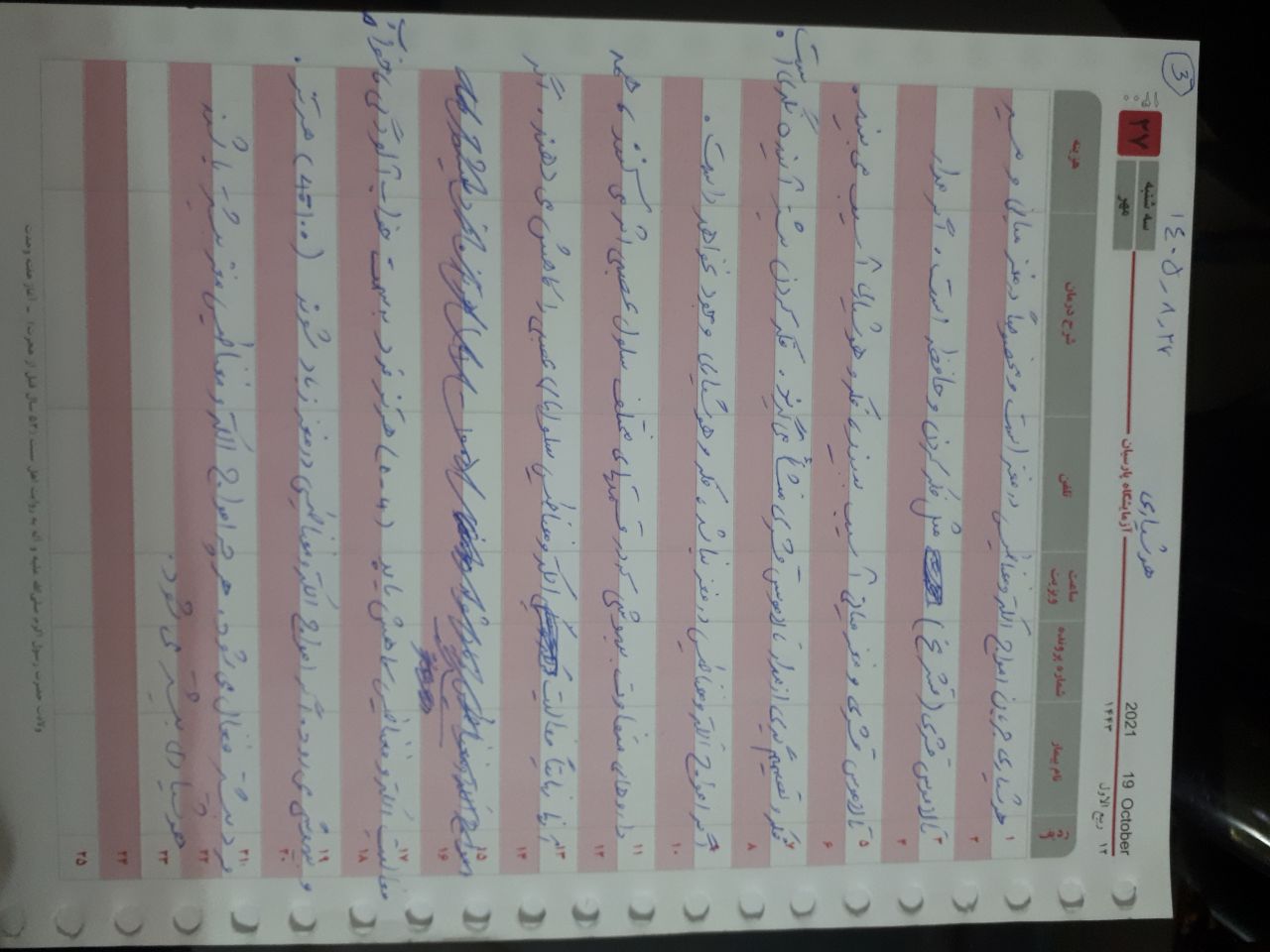
When I think about consciousness, I ask how brain activity relates to the experience of being awake and thinking. Two pages of my notes focus on the midbrain, the thalamus and connections between the thalamus and cerebral cortex. They lead me to consider whether electrical and electromagnetic activity might help explain consciousness.
That is a hypothesis, not a settled answer. Observing neural activity during thought does not by itself establish that consciousness is an electromagnetic wave. A testable account would need to define its measurements and specify what observation could support or contradict it.
Sleep, anesthesia and changing mental states
The notes connect sleep and anesthesia with changes in neural activity. They also ask how injury to parts of the brain affects awareness. I use these questions to frame the problem; I do not present a new experiment or clinical dataset here.
The draft assigns simplified frequency ranges to sleep and greater activity. I am not presenting those numbers as diagnostic thresholds or boundaries for anesthesia. The draft's suggestion that more activity means more consciousness should likewise be read as an initial conjecture, not a relationship demonstrated in this essay.
Thought also reaches into the future
Another part of the notes concerns decisions and future-oriented thought. An account of consciousness needs to address planning and imagining events as well as recalling them. The question remains how particular networks and patterns of activity contribute to these different processes.
Scientific context added by the editor
The NIGMS explanation of anesthesia distinguishes general anesthesia, sedation, regional anesthesia and local anesthesia. They do not all cause unconsciousness, and the mechanisms of all anesthetics are not completely understood. That source does not validate an electromagnetic identity theory of consciousness or the draft's frequency thresholds.
This context is an editorial addition. The two original handwritten pages are available below for comparison.
Read the original handwritten pages
Supplied photographs preserved unchanged. Page numbers refer to the circled manuscript numbers, not the diary's printed dates. Open an image to inspect it at full size.