Memory, mind and what it means to record an experience
From physical traces to human recollection: an editorial rewrite of two notes on memory and psyche, with evidence distinguished from conjecture.

What does it mean to record an experience?
In these notes I describe memory through recording, traces and recognition. I ask how an experience can leave something that can later be recalled. That question led me to consider electromagnetic activity and what I call the psyche in the manuscript.
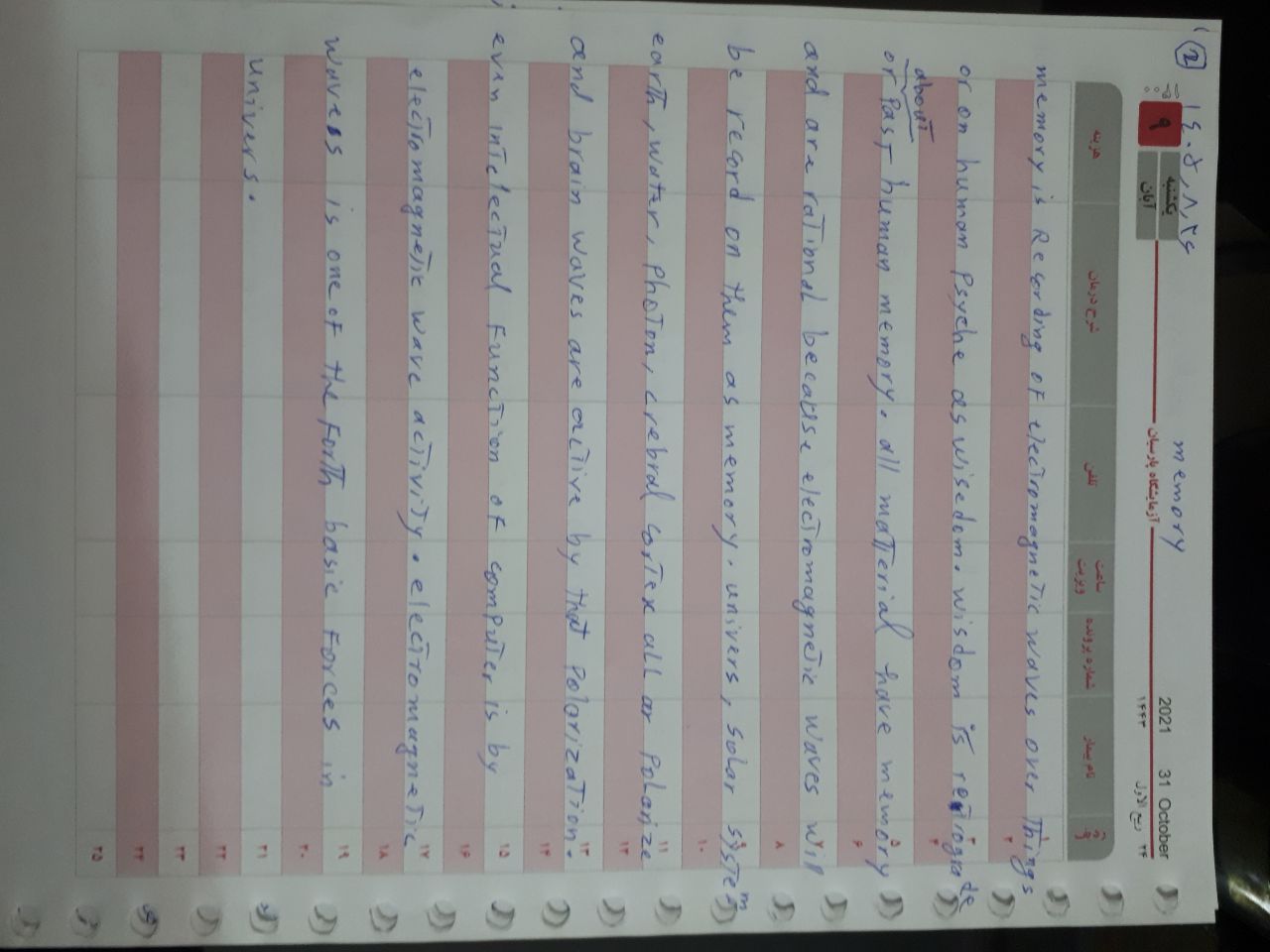
One page extends the idea beyond the brain, asking whether traces might persist in matter, water, light and the surrounding world. The word memory needs care here. A physical change in a system and a person's recollection are not interchangeable concepts. My notes provide no experiment or measurement establishing that they share one mechanism.
Mind, psyche and brain
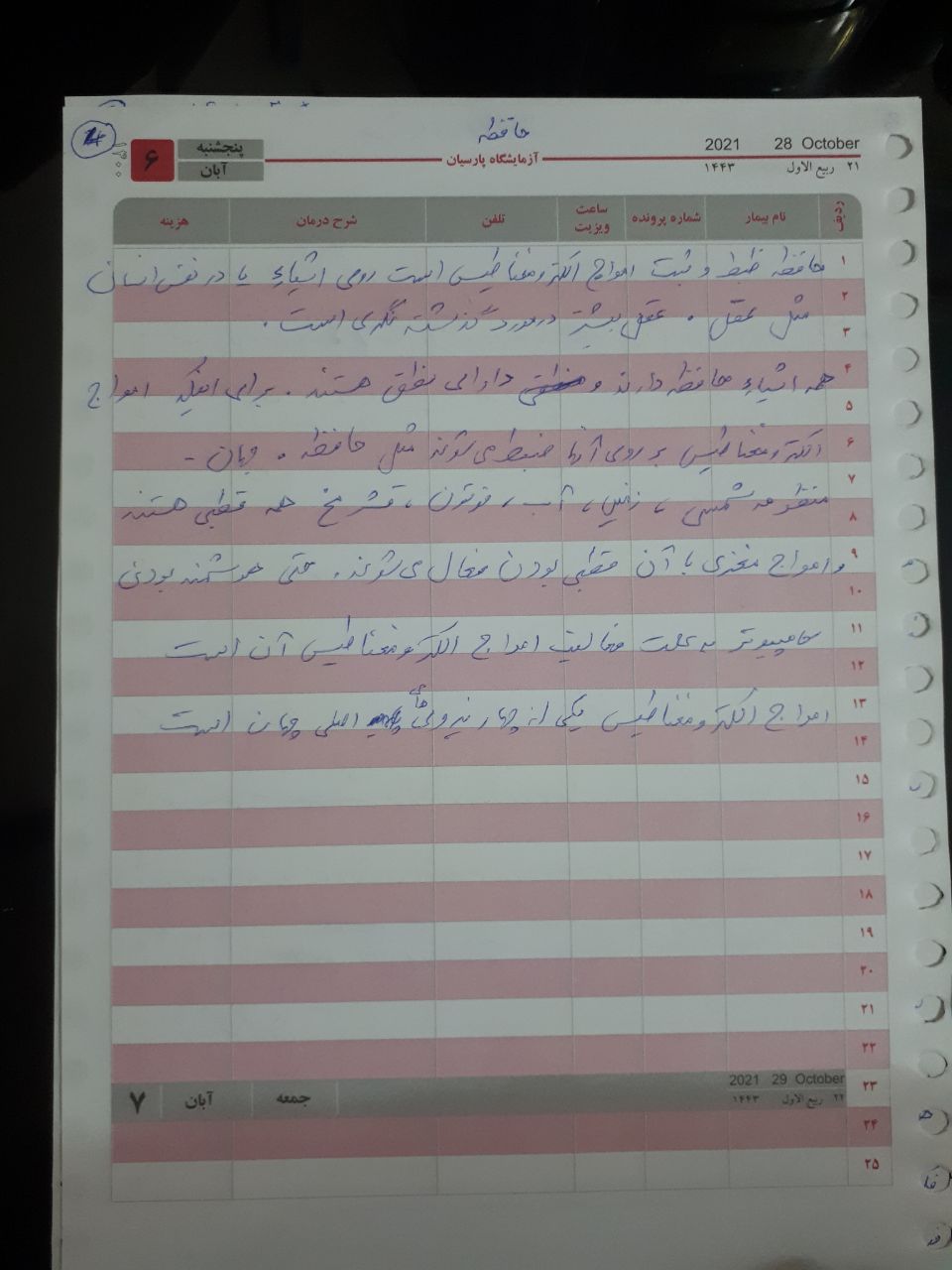
The Persian page brings memory, psyche and soul into the same discussion. These are conceptual terms in my attempt to think about human experience. Their use does not identify a measured storage structure outside the brain.
The English page also mentions polarization and the electrical operation of computers. An analogy between storage in a device and human remembering can prompt a useful question, but resemblance alone does not establish a common explanation. Developing this proposal would require clearer definitions of recording and retrieval.
The scope of the proposal
This is a personal hypothesis about memory. It is not a clinical trial or a treatment for memory loss. The notes do not provide experimental support for autobiographical memories being stored in all materials or outside the brain.
Scientific context added by the editor
An archived NIMH report from 2014 describes a rat experiment in which changing the strength of neural connections inactivated and then reactivated a memory. This is evidence about neural circuits. It does not demonstrate personal memories in water, photons or a psyche independent of the brain.
This context was added to distinguish the proposal from the evidence. Both original pages are retained below.
Read the original handwritten pages
Supplied photographs preserved unchanged. Page numbers refer to the circled manuscript numbers, not the diary's printed dates. Open an image to inspect it at full size.