Time and change: from everyday experience to a philosophical question
Morning, night and the signs of passing time: a rewritten personal reflection that distinguishes philosophical questions from physical claims.

We recognize time through change
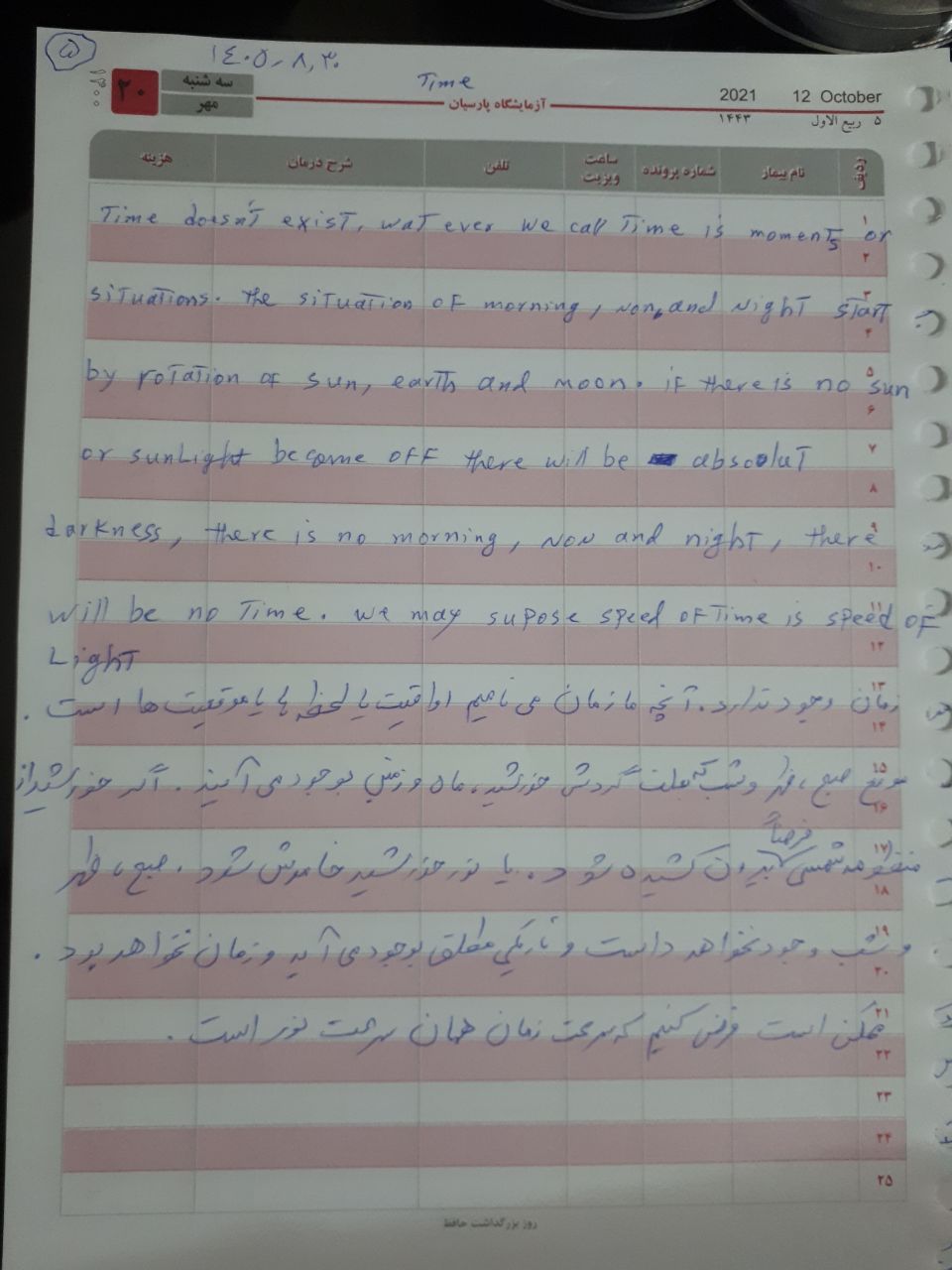
I begin this note with a question: how much does what we call time depend on changing situations? Morning, noon and night are familiar names. The alternation of light and darkness helps us recognize the passing day and organize our lives around it.
The draft states the thought more sharply: “Time does not exist.” The question I am pursuing is whether our conception of time can be separated from events and change. In the manuscript, the sentence expresses a philosophical position. It is not an experiment or a physical proof.
Losing a familiar reference
I imagine a world without sunlight, where the usual signs of morning, noon and night would disappear. The thought experiment raises a question about experience and naming. Losing a reference, however, does not establish that every physical process or way of measuring duration would stop.
The distinction matters. Our everyday experience of time and its operational definition in physics are different questions. This note reflects on the former and supplies no experimental case for replacing the latter.
Why mention the speed of light?
The final line suggests that the “speed of time” might be the speed of light. It remains a conjecture in the draft. I am not presenting it here as a scientific relation: duration and speed are not quantities with the same meaning or units.
Historical context added by the editor
NIST's historical account of ancient calendars describes how apparent celestial motion supplied references for timekeeping. This archived history does not validate the disappearance of time in darkness or an identity between time and the speed of light. The original handwritten page is reproduced below.
Read the original handwritten pages
Supplied photographs preserved unchanged. Page numbers refer to the circled manuscript numbers, not the diary's printed dates. Open an image to inspect it at full size.